Our projects
Here is a cross-section of our current projects:
Vuilleumier cryocooler
As part of the MBIE-funded AETP project (Contract Number RTVU2004) on Electrification of Heavy Transport in New Zealand, we are working on a Vuilleumier cryocooler that could potentially be mounted on the rotor of a superconductive electric motor to remove a heat load of 50 W at 50 K from the windings.
A Vuilleumier cryocooler uses heat as the main energy input, which can be provided at a much higher power per volume and weight ratio than by mechanical compression and expansion using pistons and heavy linear motors. In addition to that, the entire cycle takes place at constant volume, which allows it to be sealed statically. The only moving parts are two lightweight displacers that move the gas between the three temperature levels (hot, ambient, and cold), which requires very little power.
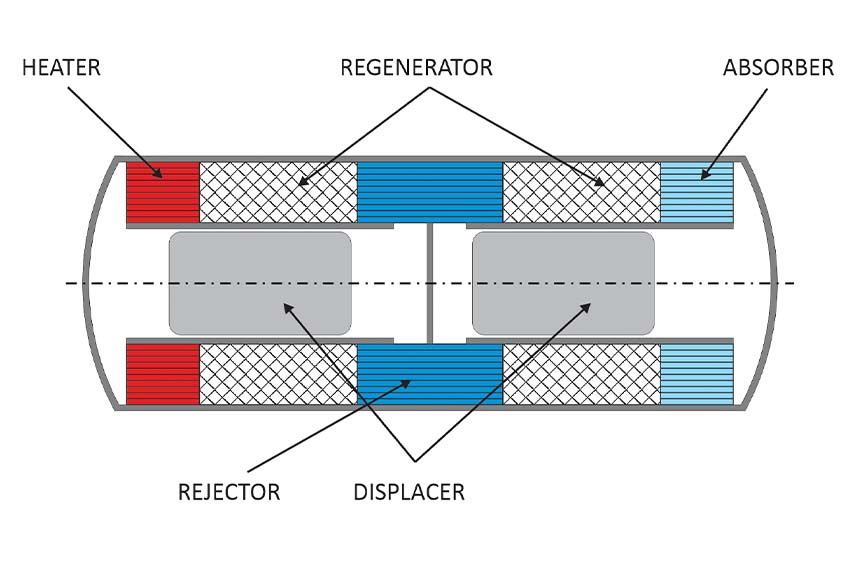 Vuilleumier cryocooler design concept
While the cycle is effectively a heat engine driving a refrigerator at a potentially lower overall COP, the design offers advantages for the intended application. The project is currently in its simulation and design stage; manufacturing is expected to start towards the end of 2026.
While the first test rig will not be tested on a rotor, a concurrent PhD project is concerned with contact-free induction heating and contact-free power transmission and control of two linear motors that will enable the future operation on the Vuilleumier cryocooler in rotation. This concept will be implemented in a subsequent test.
Thermoacoustic refrigerator
The beauty of thermoacoustic machines is the fact that there are no moving parts involved. This makes them very reliable and highly attractive for the cooling of a superconductive rotor. However, due to the wavelengths of the acoustic waves involved, the resonator tube tends to be very long. A PhD project is currently under way to build a travelling-wave thermoacoustic refrigerator and explore what effect coiling or bending of the resonator tube has on its performance to make them more compact. Los Alamos National Laboratory’s software Delta EC and David Gedeon’s software Sage were used for the modelling. A test rig is currently being assembled, and experiments are expected to start in the second half of 2026.
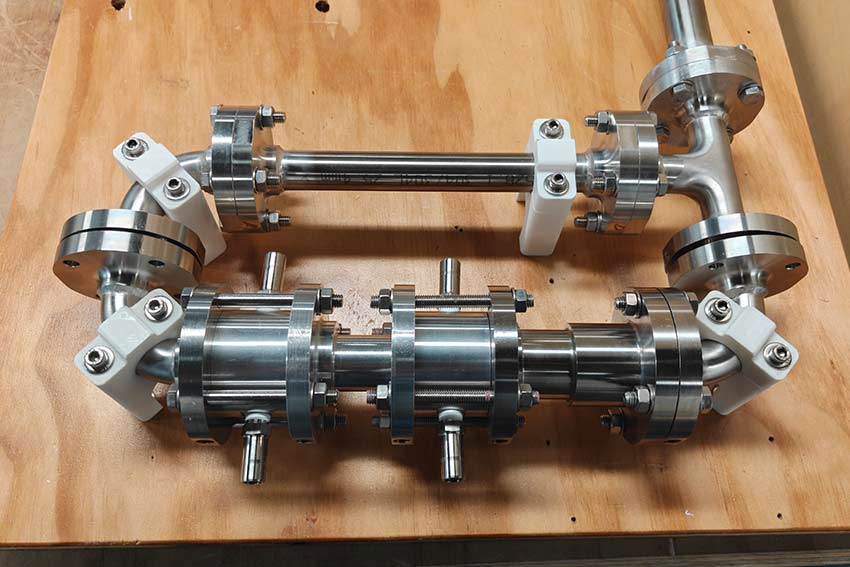 Thermoacoustic refrigerator test rig
Linear motor development
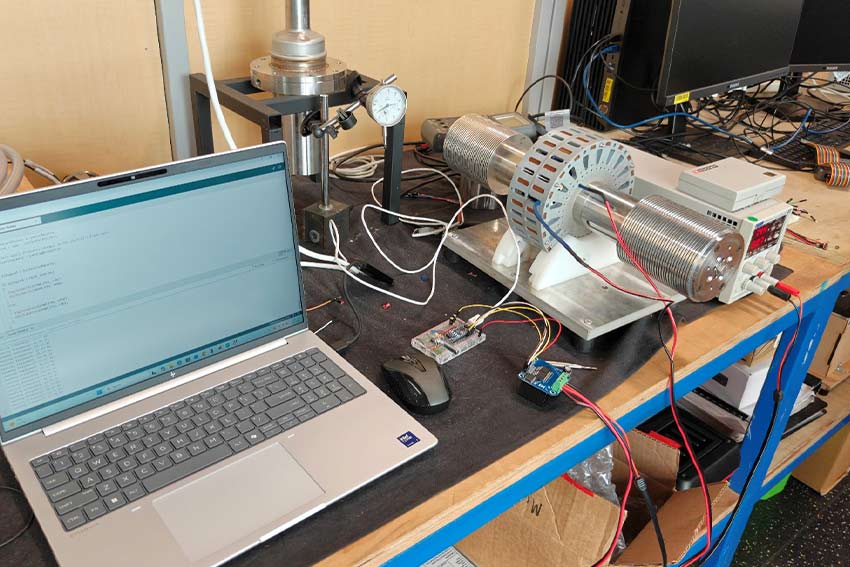 Linear motor development
Linear motion of pistons and displacers is the preferred operation in Stirling machines as it does not introduce any side load that would lead to increased wear of seals. To drive pistons and displacers in Stirling refrigerators, linear motors are the most common way of achieving this. THERA Lab has started its own linear motor development on a very basic level.
Heat-actuated Stirling refrigerator
Following on from our previous liquid piston experiments in a four-cylinder Siemens configuration which were limited in terms of the frequency we could achieve (typically less than 10 Hz), we moved on to using solid pistons. While the advantage of liquid pistons are their total lack of gas leakage, their self-lubrication, and absence of having to machine anything, they would have to be very long to achieve significant amplitudes, and thus, pressure fluctuations. We decided to use solid pistons supported by flexure bearings to be able to tune the natural frequency of the system by changing the piston mass and/or the stiffness of the bearings.
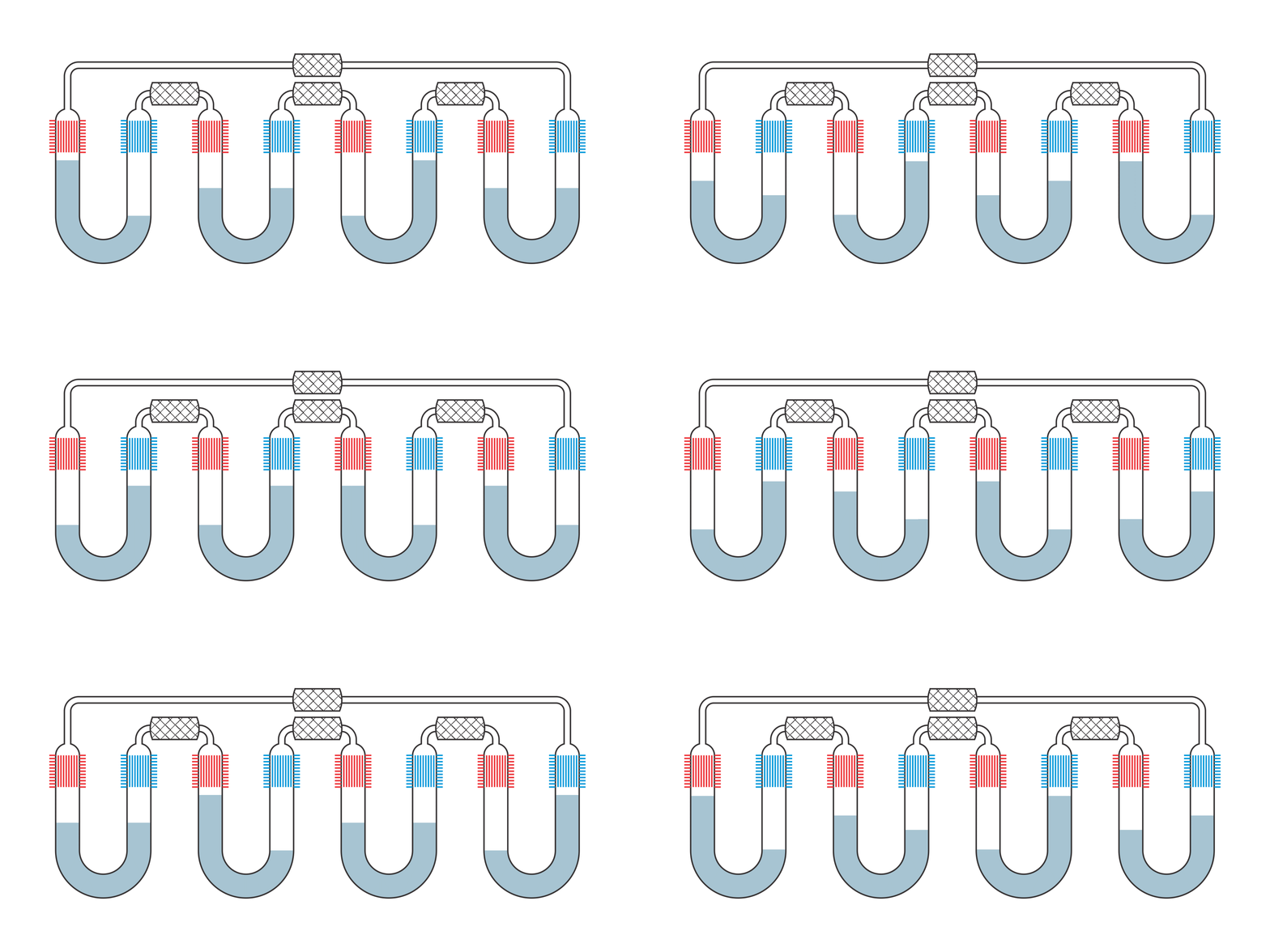 Four-cylinder heat engine in Siemens configuration using liquid pistons
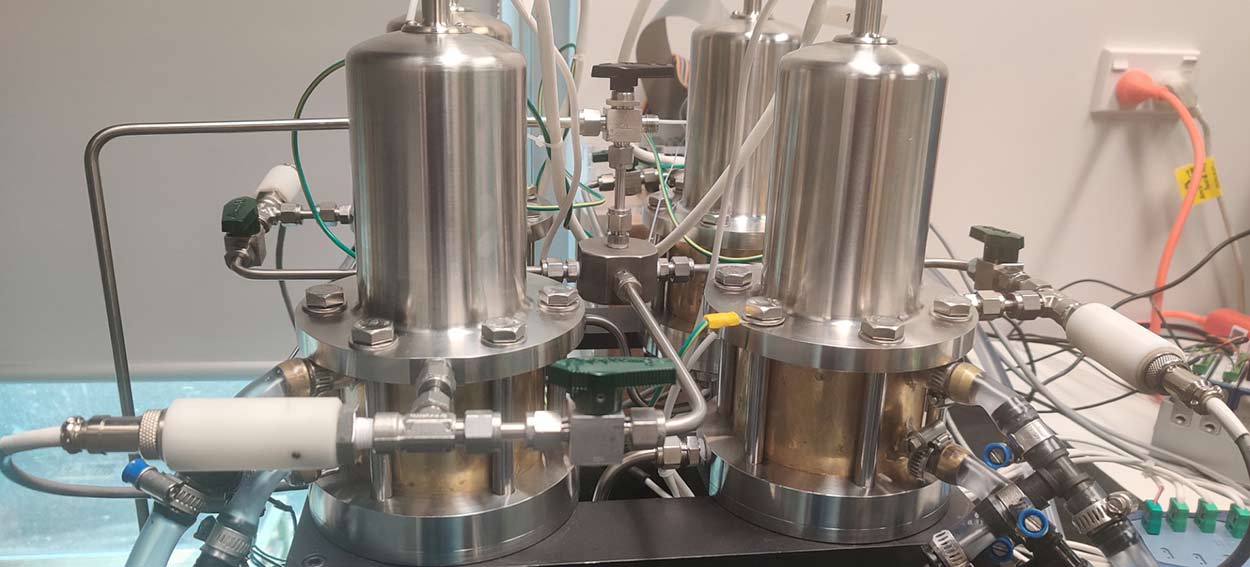 Heat-actuated Stirling refrigerator in Siemens configuration using solid pistons
Alpha and beta Stirling refrigerator test rigs
We are currently setting up two Stirling refrigerator test rigs, one in alpha, the other one in beta configuration. The objective is to carry out parameter studies to investigate the effects of phase angle between the pistons (alpha) and the piston and the displacer (beta) and dead volume at varying frequencies. The pistons and displacers are driven by linear motors controlled by LabView.
Rotating heat pipes/thermosiphons
In a new PhD project, we are investigating the effect of rotation on the performance of heat pipes. An essential part of this project is the optimisation of the wick structure that we are planning to 3d-print.
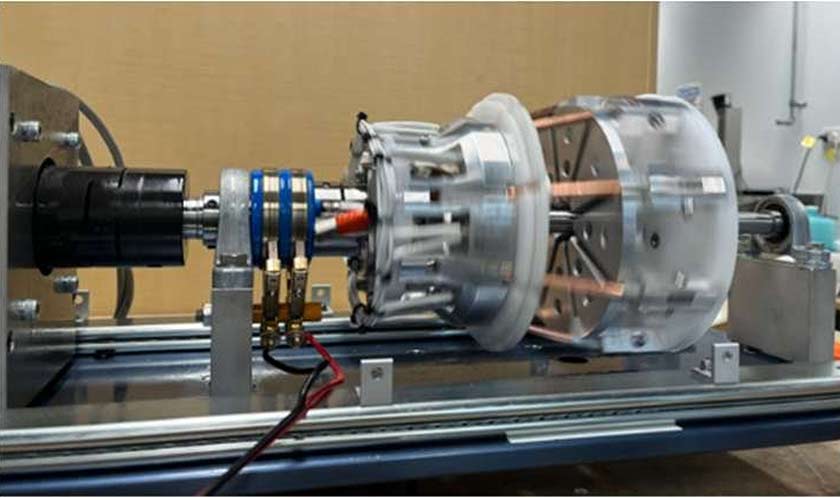 Rotating heat pipe test rig
Cryo-engineering: Conveyance of Cryogenic Neon Slush
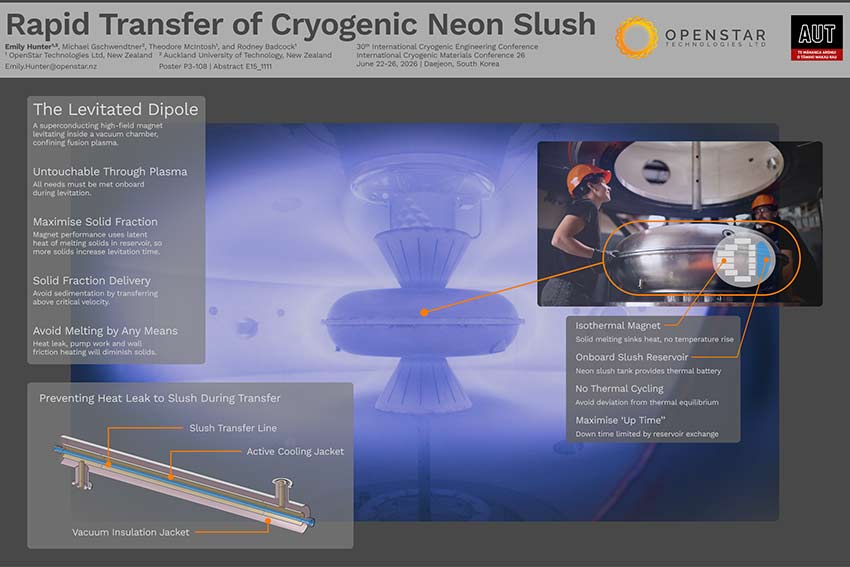 OpenStar Technologie’s nuclear fusion reactor concept (courtesy of OpenStar Technologies)
In collaboration with OpenStar Technologies in Wellington, a Master’s project is investigating the conveyance of Neon slush (solid phase suspended in liquid phase) to cool the superconducting magnet that confines a fusion plasma. Fluid dynamics of slush will be analysed to ensure high solid fraction is delivered to the magnet to maximise the cooling capacity of the latent heat. The challenge will be in creating and validating a model slush system which is realistic enough to enable design of a real system.
AI-supported gear optimisation tool for motorsports
Although outside our research focus, we like to support collaboration with industry. We received the Timatanga Initiate Grant from AUT Ventures to support one of our Master’s students to develop an AI-supported gear optimisation tool for the motorsport industry in collaboration with Compact Motorsport. The project is expected to be completed towards the end of 2026.
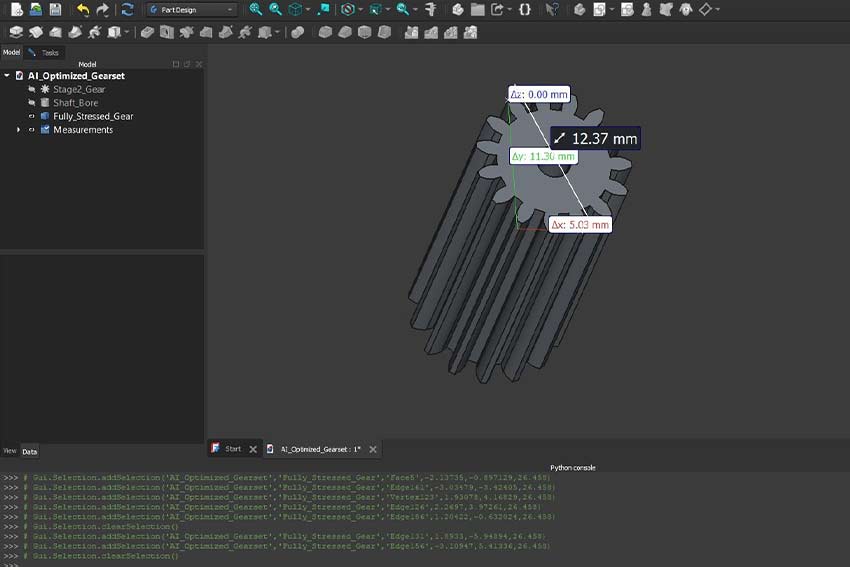 AI-supported gear optimisation tool
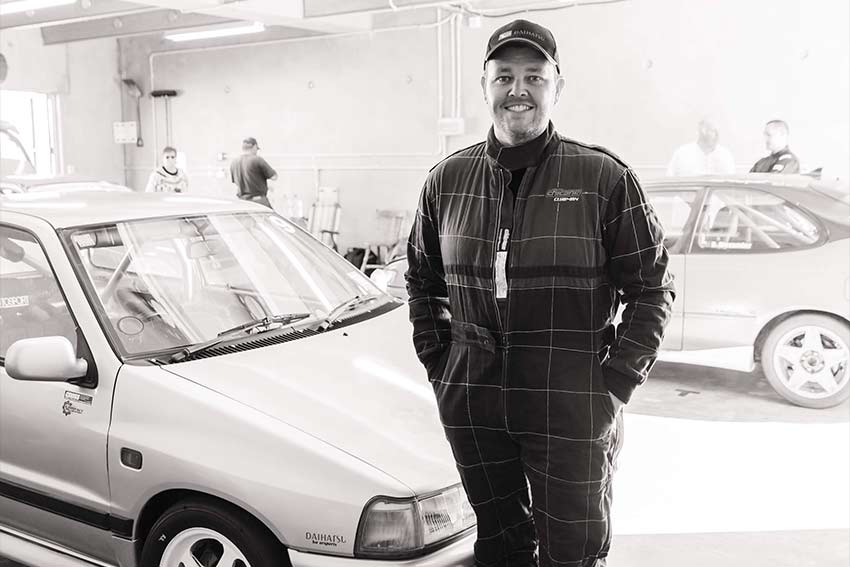 Tim Hart of Compact Motorsport (courtesy of Compact Motorsport)